Your Daily To-Do List Just Applied for Historic Landmark Status (Requirements: Existing Unchanged for Over Six Months)
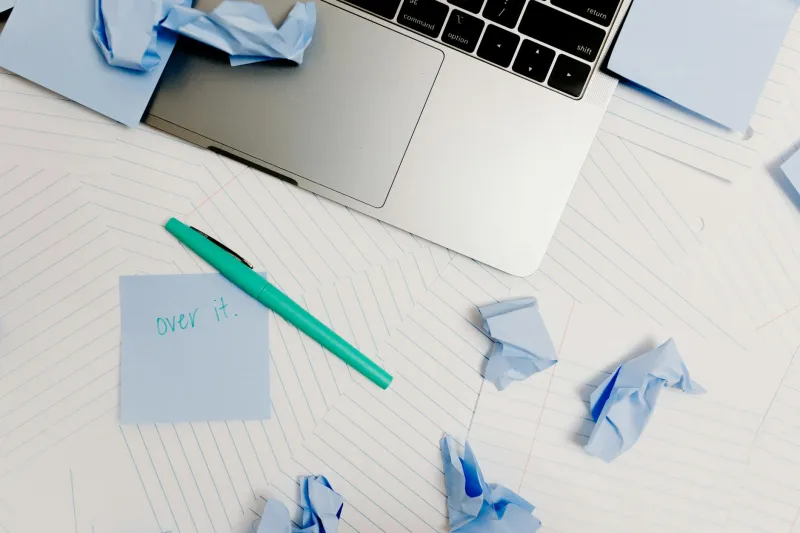
A Monument to Human Optimism
Breaking news from the Department of Things That Never Actually Happen: your daily to-do list has officially filed for historic preservation status. After existing in virtually unchanged form since sometime around the Obama administration, experts agree it qualifies as both a cultural landmark and a testament to the boundless optimism of the human spirit.
The application, submitted by the National Registry of Abandoned Intentions, cites the list's "remarkable consistency in containing the same seventeen tasks for 847 consecutive days" as evidence of its historical significance. Lead archivist Dr. Michael Chen notes: "We've never seen such dedication to preserving aspirational content. Some of these tasks have been rewritten so many times, the ink has achieved its own geological layer."
 Photo: Dr. Michael Chen, via souldentalnyc.com
 Photo: National Registry of Abandoned Intentions, via apaengineering.com
The Archaeological Significance
Carbon dating of various to-do lists across America reveals a fascinating timeline of human ambition. The oldest continuously maintained task appears to be "organize closet," with some specimens dating back to 2019. Close behind are "start workout routine," "call dentist," and the mysteriously persistent "that thing with the papers."
Professor Linda Rodriguez, who specializes in Domestic Archaeology at the University of Procrastination, explains: "These lists represent a unique form of historical record. They show not what people accomplished, but what they consistently believed they were about to accomplish. It's like a diary of perpetual tomorrow."
 Photo: University of Procrastination, via i.etsystatic.com
The Daily Ritual of Renewal
Every morning, millions of Americans participate in the sacred ritual of The List Creation. This ceremony typically occurs between 6:47 AM and the first sip of coffee, when optimism levels reach their daily peak. During this brief window, the human brain genuinely believes it can accomplish 23 separate tasks before lunch.
The ritual follows a precise formula:
- Write "TODAY" at the top with aggressive underlines
- List everything you didn't do yesterday
- Add three new impossible things
- Assign random numbers to create the illusion of prioritization
- Feel briefly powerful and organized
- Immediately get distracted by a text message
The Great Prioritization Theater
Perhaps the most elaborate aspect of to-do list culture is the complex ranking system people develop. Tasks are color-coded, numbered, starred, and categorized with the precision of a NASA launch sequence. Some people use multiple highlighters. Others create sub-lists. The most ambitious souls develop entirely new organizational methodologies.
Yet somehow, "buy groceries" consistently ranks below "reorganize entire life philosophy," and "do laundry" is perpetually less urgent than "research optimal sleep schedules."
Dr. Chen observes: "We've documented lists where 'save for retirement' appears directly above 'remember to eat lunch.' The prioritization system seems to operate independently of logic, time, or the basic needs of human survival."
The Emotional Journey of List Abandonment
By 10:47 AM, most to-do lists enter what researchers call "the acceptance phase." This is when the list-maker realizes that "deep clean entire house" was perhaps overly ambitious for a Tuesday, especially considering they haven't even opened their laptop yet.
The emotional stages of to-do list abandonment follow a predictable pattern:
- Denial: "I can still do everything if I skip lunch"
- Anger: "Why did I write 'learn Spanish' as a Tuesday task?"
- Bargaining: "If I do just three things, that's technically productive"
- Depression: "I am a chaos goblin with no organizational skills"
- Acceptance: "Tomorrow's list will definitely be more realistic"
The Reincarnation Cycle
The most remarkable feature of to-do lists is their zombie-like persistence. Tasks that die on Tuesday are miraculously resurrected on Wednesday, often with renewed enthusiasm. "Call insurance company" has been brought back from the dead more times than a superhero character.
This creates what sociologists term "task immortality" – the phenomenon where certain responsibilities achieve a kind of eternal life through constant postponement. Some tasks become so permanent they develop their own ecosystems of related sub-tasks and guilt.
The Modern American To-Do List Ecosystem
Today's to-do lists exist across multiple platforms, creating what experts call "fragmented responsibility distribution." You might have tasks in your phone, on sticky notes, in three different apps, written on your hand, and stored in what psychologists call "mental file cabinet number seven" (located somewhere behind your grocery list and your high school locker combination).
This distributed system ensures that no single task can ever be definitively marked as "completed" because there's always another version of it living somewhere else, waiting to be rediscovered and re-added to tomorrow's list.
The Vision Board Theory
Recent research suggests that to-do lists aren't actually productivity tools at all – they're vision boards for an alternate version of yourself. This theoretical person wakes up at 5:30 AM feeling refreshed, enjoys organizing things, and has never experienced the phenomenon of standing in the kitchen for five minutes trying to remember why they came there.
Dr. Rodriguez explains: "The to-do list represents the person you become in your mind at 7 AM. By 7 PM, you realize you're actually a completely different person who finds 'reply to emails' emotionally exhausting."
The Cultural Impact
To-do lists have become so embedded in American culture that entire industries have formed around them. There are apps for making lists, courses on list optimization, and support groups for people whose lists have achieved sentience and started making demands.
Some therapists now specialize in "list grief counseling" for people struggling to accept that they will never actually organize their digital photos or learn to play the guitar they bought in 2018.
The Beautiful Futility
In the end, the daily to-do list serves a purpose beyond productivity – it's a daily act of hope. Every morning, millions of Americans sit down and genuinely believe that today will be the day they become the organized, efficient person they've always known they could be.
As Dr. Chen concludes: "The to-do list isn't a failure of organization. It's proof of the incredible human capacity for optimism. Every single day, we look at yesterday's evidence of our limitations and think, 'But tomorrow could be different.'"
And you know what? Maybe tomorrow really will be the day you finally organize that closet. Right after you add "write more realistic to-do list" to tomorrow's list.