The Parking Lot Ballet: How Americans Perfected the Art of Vehicular Mind Reading
The Opening Act: Spotting Your Mark
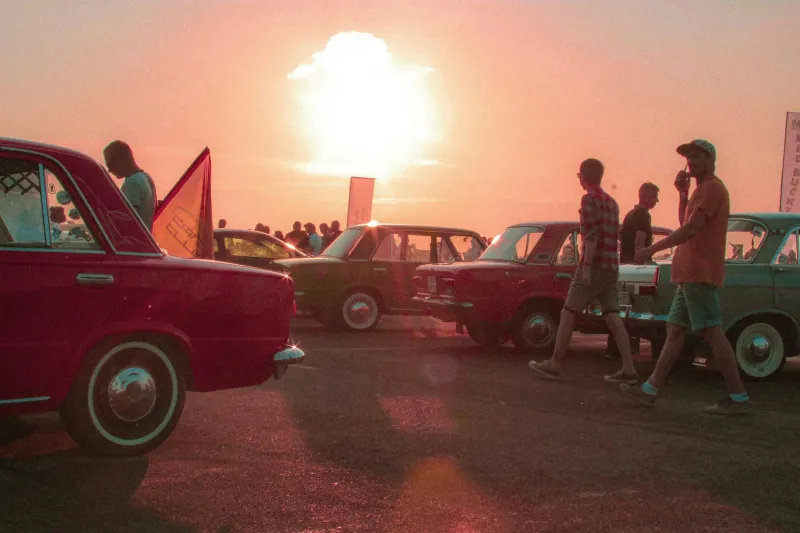
You're cruising through the Target parking lot at 2 PM on a Saturday, which was your first mistake. Your second mistake was thinking this would be a quick trip. Now you're trapped in what can only be described as automotive theater, where every driver is simultaneously the star, director, and audience of their own one-person show titled "I Definitely Saw That Spot First."
The performance begins the moment you spot someone walking toward their car while carrying bags. This person—let's call them The Walker—has now become the most important person in your immediate universe. They don't know it yet, but they're about to participate in a complex dance that involves more nonverbal communication than most marriages.
The Stalk and Hover: A Masterclass in Subtle Intimidation
You begin The Follow, which requires the perfect balance of "I'm definitely not stalking you" energy while also making it crystal clear that you have territorial claims on whatever parking space they're about to vacate. This involves maintaining exactly 15 feet of distance—close enough to establish dibs, far enough to maintain plausible deniability.
The Walker, meanwhile, has entered their own performance phase: The Acknowledgment. They've spotted you in their peripheral vision and now must decide whether to speed up (rude), slow down (also rude), or maintain their current pace while pretending they haven't noticed your vehicular lurking (the socially acceptable option).
The Great Wave Exchange: Diplomacy in Motion
Here's where American parking lot culture reaches peak sophistication. The moment The Walker reaches their car, you must execute The Gratitude Wave—a gesture that somehow communicates "Thank you for existing in this space I want" before they've actually done anything for you.
The Walker must then respond with The Acknowledgment Wave, which translates roughly to "I see you, I accept your claim, and I will now perform the ancient ritual of loading my groceries at a reasonable pace while you wait."
Miss this exchange, and you've committed a parking lot felony. Execute it perfectly, and you've just participated in one of the most civilized interactions possible between strangers operating two-ton metal death machines.
The Loading Performance: Theater of the Absurd
Now begins the most delicate part of the entire operation. The Walker must load their groceries and prepare to leave while you wait. But here's the thing—they can't be too fast (suggests they're being rushed) or too slow (suggests they're being inconsiderate). They must achieve the perfect pace of "I'm moving with purpose but not because you're pressuring me."
You, meanwhile, must maintain your position while projecting an aura of "I'm patient and definitely not silently judging how long it takes you to organize your trunk." This often involves the strategic checking of your phone, the casual adjustment of mirrors, or the careful study of your steering wheel as if it contains the secrets of the universe.
The Reverse Standoff: When Things Go Wrong
But wait—there's a plot twist. Just as The Walker starts to reverse, another car appears from the opposite direction. This is The Interloper, and they represent everything wrong with society. They haven't done The Follow. They haven't earned The Wave. They're just going to swoop in and steal your rightfully claimed spot.
This triggers The Standoff, where you and The Interloper engage in a battle of wills using nothing but turn signals, strategic positioning, and the occasional passive-aggressive acceleration. The Walker, still trying to back out, has become an unwilling referee in this automotive chess match.
The Resolution: Justice Served or Injustice Endured
If you win, The Walker will often provide a bonus Solidarity Wave—a gesture that says "I witnessed this injustice and I'm glad the right person got my spot." You respond with The Victory Wave, which is somehow different from The Gratitude Wave in ways that every American driver instinctively understands but could never explain.
If you lose to The Interloper, you must execute The Dignified Retreat, driving away while maintaining your composure and definitely not muttering things about people who "don't understand how parking lots work."
The Unspoken Constitution
The truly remarkable thing about parking lot etiquette is that nobody teaches it, yet everyone knows it. There's no DMV handbook chapter on The Wave, no traffic school course on proper hovering distance, no legal precedent for spot-claiming protocols. Yet somehow, millions of Americans navigate these interactions daily with a level of sophistication that would make United Nations peacekeepers jealous.
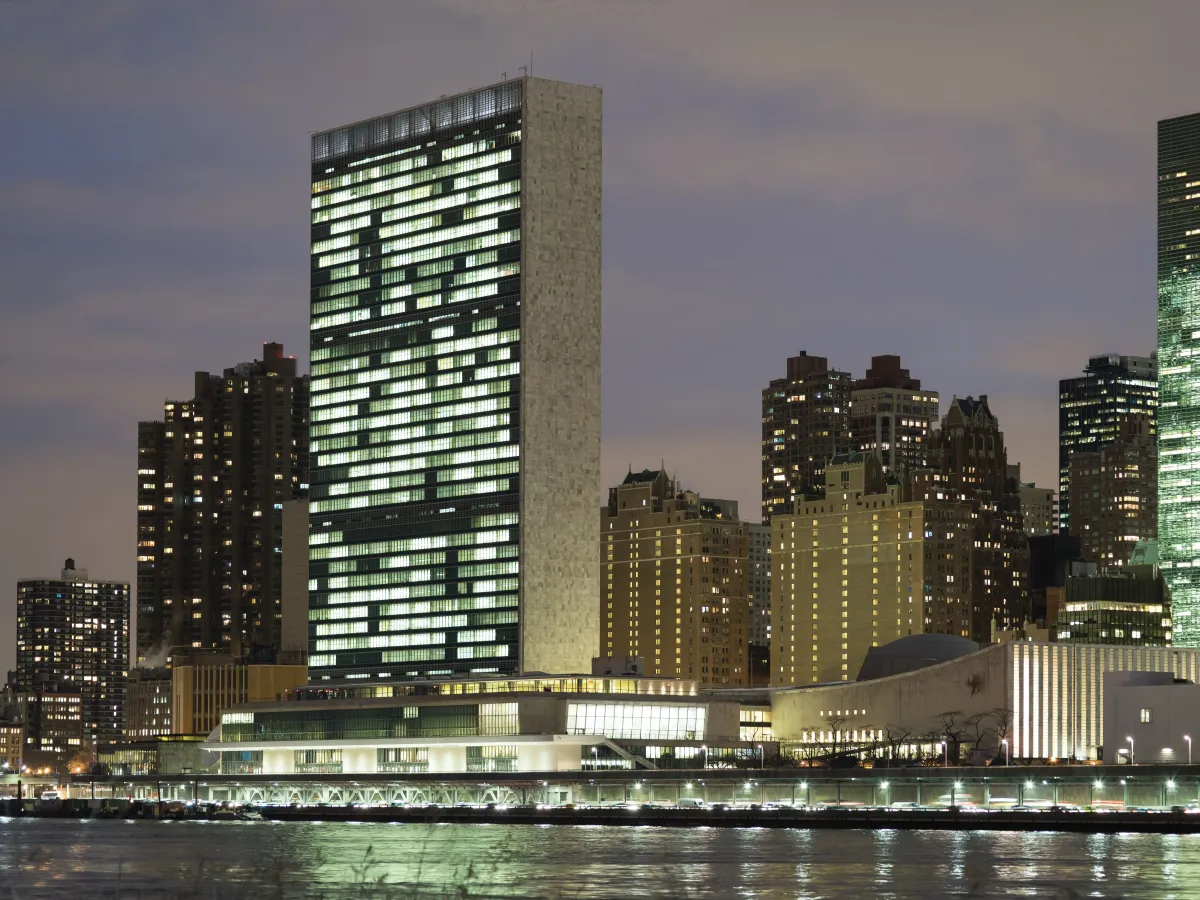 Photo: United Nations, via media.architecturaldigest.com
We've created an entire system of automotive diplomacy that operates on good faith, mutual respect, and the shared understanding that parking is a scarce resource that must be distributed through a combination of patience, courtesy, and strategic positioning.
The Bigger Picture: A Metaphor for Life
In the end, the parking lot wave represents something uniquely American: our ability to create order from chaos through unspoken social contracts. We've turned the simple act of finding a parking space into a complex social interaction that somehow works, most of the time, without any official oversight or enforcement.
It's democracy in action, capitalism with a human face, and community building through the shared experience of needing somewhere to put our cars. And honestly? The fact that this system works at all might be the most impressive thing about American society.
So the next time you find yourself participating in this elaborate parking lot ballet, take a moment to appreciate the beautiful absurdity of it all. You're not just finding a parking space—you're participating in one of the most sophisticated examples of mass cooperation in human history.
And yes, that definitely deserves a wave.