Your Reusable Bag Empire: How You Built an Eco-Friendly Fortune That Never Leaves the House
The Great Accumulation
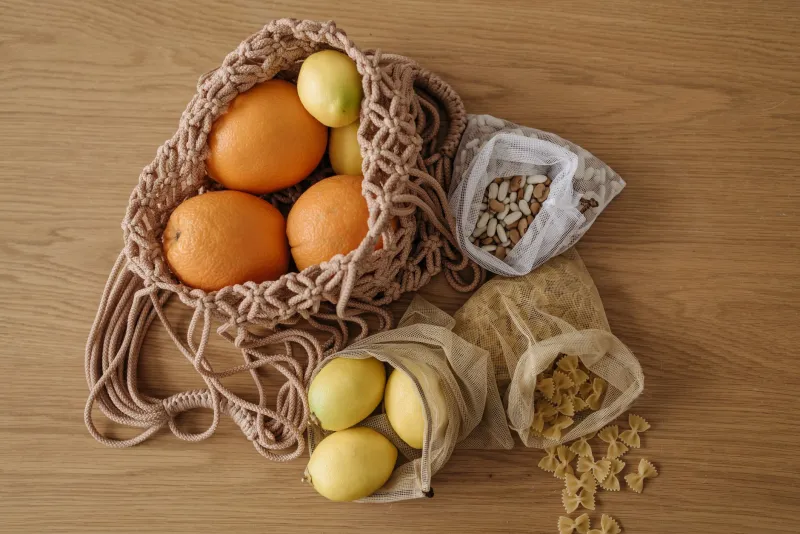
Somewhere in your house right now—probably in that kitchen drawer that's become a black hole for random stuff—lies your reusable bag empire. You didn't plan to become a textile mogul, but here you are, the proud owner of approximately forty-seven eco-friendly shopping bags from every grocery store, farmer's market, and well-intentioned promotional event you've encountered since 2015.
You are single-handedly keeping the reusable bag industry afloat. You're basically their biggest investor. If reusable bags were cryptocurrency, you'd be Elon Musk.
And yet, somehow, impossibly, there are exactly zero of these bags in your car right now.
The Collection Audit
Let's take inventory of your accidental empire:
-
The OG Canvas Tote: Your first reusable bag, bought with such environmental optimism. It's now buried under seventeen other bags like an archaeological artifact.
-
The Whole Foods Collection: You have four of these, because every time you shop there without a bag, you buy another one out of shame. They're breeding.
 Photo: Whole Foods, via i.kym-cdn.com
-
The Farmer's Market Special: Made from recycled materials and guilt. Cost $12. Has been used twice.
-
The Corporate Swag Bags: Free bags from conferences, job fairs, and that one time you walked past a bank promotion. They feature logos from companies you don't remember interacting with.
-
The Impulse Purchase Premium Models: The $25 "investment" bags with insulation, structured bottoms, and the promise they'll change your entire shopping experience. They're still in their packaging.
-
The Mystery Bags: You have no idea where these came from. They just appeared, like they're reproducing through mitosis.
The Eternal Cycle of Shame
Every shopping trip follows the same tragic pattern:
Phase 1: Optimistic Departure You leave the house feeling good about yourself. You're going to shop responsibly. You're an environmental warrior. You've got this.
Phase 2: The Parking Lot Realization You park at the store and reach for your reusable bags. Your hand touches empty space. Your bags are at home, probably having a meeting about how disappointed they are in you.
Phase 3: The Internal Negotiation "I'll just buy a few things and carry them out by hand," you tell yourself. "I don't need a bag for three items."
Phase 4: The Shopping Cart Reality Twenty minutes later, you're pushing a cart full of groceries toward checkout, having somehow purchased everything except what you came for.
Phase 5: The Plastic Bag Walk of Shame You accept plastic bags from the cashier while internally composing your resignation letter to the Environmental Protection Agency.
 Photo: Environmental Protection Agency, via img.freepik.com
The Checkout Counter Dilemma
Standing at checkout, bagless and ashamed, you face the ultimate first-world problem: Do you buy another reusable bag?
Your brain presents compelling arguments:
Pro: "This time will be different. You'll remember to bring bags if you have more bags."
Con: "You already own enough bags to outfit a small country. This is insanity."
Pro: "But this one has a cute design and supports local artists!"
Con: "You said that about the last six bags."
Pro: "It's only $3. That's basically free."
Con: "You've spent $73 on 'basically free' bags this year."
You buy the bag. Obviously. Because you're an optimist, and optimists believe this time will be different.
The Home Arrival Ceremony
You arrive home with your new bag and your groceries in seventeen plastic bags (because you asked for paper but somehow still got plastic—another mystery of modern retail).
Your new reusable bag joins its siblings in whatever location you've designated as "bag storage." This could be:
- The kitchen junk drawer
- A closet shelf
- The trunk of your car (where it will remain until you clean out your car in 2027)
- That spot by the door where you put things you "definitely won't forget"
The bag settles into its new home, ready to serve. It will wait patiently, like a loyal dog, for the day you remember to bring it shopping.
That day will never come.
The Great Migration
Occasionally, you'll attempt to solve this problem through strategic bag placement. You'll put bags in your car, by your keys, in your purse. You'll set phone reminders. You'll write notes.
But reusable bags operate under quantum physics principles. The moment you need them, they phase-shift to a different dimension. They're Schrödinger's shopping accessory—simultaneously in your car and not in your car until observed at the grocery store, where they collapse into a wave function of "definitely at home."
The Environmental Paradox
Here's the beautiful irony: by constantly buying reusable bags and never using them, you've actually created a more environmentally friendly system than intended. Your bags last forever because they're never exposed to wear and tear from actual use.
You're not a bad environmentalist—you're a bag preservationist. You're maintaining a strategic reserve of reusable bags for the coming apocalypse, when society will need your extensive collection to rebuild civilization.
Future archaeologists will discover your bag hoard and conclude you were either very environmentally conscious or preparing for the Great Grocery Shortage of 2024.
The Support Group
You're not alone in this struggle. There's an entire underground community of bag hoarders. You recognize each other at checkout lines—the sheepish expression, the apologetic shrug to the cashier, the ritual purchase of yet another reusable bag.
You could start a support group: "Reusable Bag Owners Anonymous."
"Hi, I'm Sarah, and I own twenty-three reusable bags."
"Hi, Sarah."
"I haven't successfully brought a bag to the store in four months."
"One day at a time, Sarah."
The Ultimate Truth
The real purpose of reusable bags isn't to carry groceries—it's to make you feel environmentally responsible while teaching you about the gap between intention and execution. They're a $3 lesson in human psychology, a portable reminder that we're all just trying our best in a complicated world.
Your bag collection represents hope. Hope that tomorrow you'll be more organized, more prepared, more environmentally conscious. Hope that you'll remember the bags, save the planet, and finally become the person you think you are when you buy organic kale.
And honestly? That hope is worth way more than $3.
So keep buying those bags. Keep forgetting to bring them. Keep believing that next time will be different. Because somewhere in that beautiful, ridiculous cycle of optimism and forgetfulness is the most human thing of all: the belief that we can change, even when all evidence suggests we absolutely cannot.
Your reusable bags aren't just shopping accessories—they're monuments to the triumph of hope over experience. And that, friends, is worth preserving in a kitchen drawer forever.