The Great Shelf Conspiracy: How Fancy Packaging Convinced You the Identical Product Next to It Was Inferior
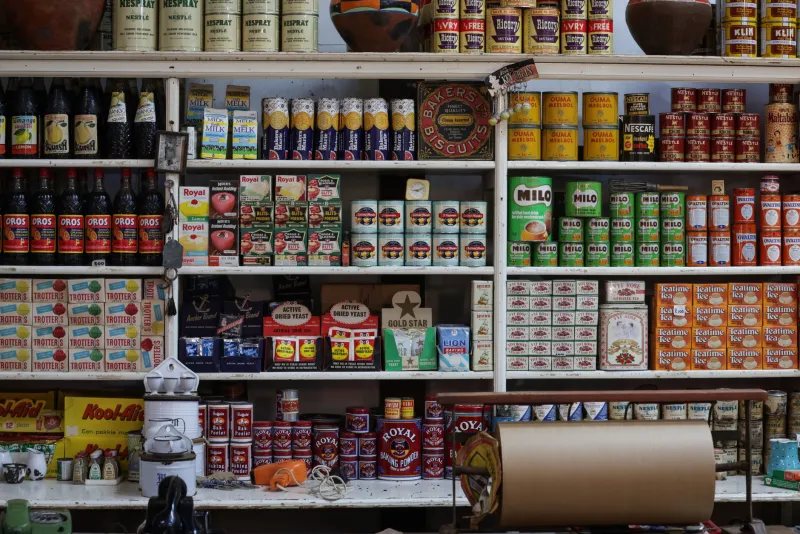
Picture the scene. You're in the grocery store, moving at the efficient clip of someone who wrote a list and is sticking to it. You arrive at the relevant aisle. You locate the product you need. And right there, directly to the left of the thing you're about to grab, is the exact same product — same ingredients, same quantity, possibly made in the same facility — for about half the price.
You grab the more expensive one.
You don't deliberate. You don't comparison shop. You barely glance at the other option. Your hand just goes, with the muscle memory of someone who has been doing this for years, directly to the brand with the logo you recognize, the packaging that looks like it was designed by an adult, and the price that is objectively harder to justify.
This is the Great Shelf Conspiracy, and you have been a willing participant your entire adult life.
The Packaging Is Doing a Lot of Heavy Lifting Here
Let's start with what's actually happening on a psychological level, because it's genuinely impressive.
The name-brand pasta has a label with clean fonts, maybe an illustration of a rolling Italian hillside, possibly a color scheme that suggests heritage and quality and someone's grandmother. The store-brand pasta, sitting three inches to its left, has a white label, large text, and the word PASTA in a font that communicates nothing except "this is pasta."
The pasta inside both bags is pasta. It is flour and water, shaped by machinery. It will taste identical when cooked. The sauce you're about to put on it will completely dominate any flavor distinction that might theoretically exist. And yet.
Something about the Italian hillside got you. You are paying $1.80 extra for a font choice and a color palette. The marketing industry calls this brand equity. We can call it what it is: you judged a bag of pasta by its cover and the cover won.
The Products Where This Is Especially Unhinged
The pasta situation is forgivable. But the shelf conspiracy goes places that are harder to defend.
Generic ibuprofen. This is perhaps the most objectively irrational version of the whole phenomenon. Ibuprofen is a specific chemical compound. It is either ibuprofen or it is not. The active ingredient on the back of the store-brand bottle is literally the same word as the active ingredient on the back of the name-brand bottle. The FDA requires this. There is no premium ibuprofen. There is only ibuprofen, and you are paying four dollars extra for the privilege of having Advil on the front.
Zip-lock bags. The store-brand zip-lock bag zips. It locks. It stores things. It is, by every functional measure, a zip-lock bag. The Ziploc brand zip-lock bag also zips, also locks, also stores things. The price difference is approximately two dollars per box, which over a lifetime of sandwich-packing adds up to a number that would make you genuinely upset if you calculated it, which is why you are not going to calculate it.
Store-brand cereal. Okay, this one has some nuance — the shapes are slightly different, the bag crinkles differently, and something about eating "Crispy O's" instead of Cheerios feels vaguely off-brand for a person who has self-respect. But nutritionally, texturally, and in terms of what they taste like with milk? You have been deceived by a circle.
Cotton swabs. They are sticks with cotton on the ends. There is one job. The store-brand version has completed the job every single time it has been assigned the job. You have been buying the ones with the blue box for fifteen years out of habit that predates your ability to make independent decisions.
The Moment the Whole Thing Collapses
Every committed name-brand loyalist eventually has the same experience, and it is devastating in the most mundane possible way.
You're at someone's house — a dinner party, a family thing, a casual hangout where snacks are involved. Someone puts out a dish of something. You eat it. It's fine. It's good, actually. You have a second helping.
And then, while helping clean up, you see the packaging. It's the store brand. The $1.79 version. The one you have been unconsciously avoiding for years based on absolutely nothing.
The psychological aftermath of this discovery is not nothing. There is a brief, vertiginous moment where you recalibrate everything. You think about all the times you reached past the cheaper option. You think about the cumulative dollar amount. You think about whether any of your other strongly held product preferences are equally fictional.
Most people do not follow this thread to its conclusion. Most people go to the grocery store the following week and buy the name brand again, because the store brand is fine but the name brand just feels more... reliable. Somehow.
The Slow Converts and What They've Learned
There is a subset of the population that has, at some point, made the switch — usually during a period of financial reckoning or as a deliberate experiment — and emerged on the other side with a slightly smug sense of enlightenment.
They will tell you, unprompted, that the store-brand olive oil is identical. That the generic allergy medication works just as well. That they've been buying the Target-brand dish soap for three years and their dishes are, if anything, cleaner.
They are correct. They are also, it must be said, a little much about it.
The real answer is somewhere in the middle: some store brands are genuinely great, some are genuinely worse, and the only way to know is to try them. But that would require standing in an aisle and actually reading labels, and you are a person with a list and a schedule and a deeply ingrained relationship with the Italian hillside pasta.
The conspiracy continues. The shelf awaits. Your hand already knows where it's going.