The Great Checkout Lane Conspiracy: How Every Other Line Moves at Light Speed While Yours Enters a Time Warp
The Initial Assessment
You approach the checkout area with the confidence of a military strategist. Cart loaded, shopping complete, you survey the battlefield of lanes stretching before you. This is it—the final boss of your grocery store adventure.
Your eyes dart between options. Lane 3 has an elderly gentleman with a cart that appears to contain the entire canned goods aisle. Lane 7 has someone arguing with the cashier about a coupon that expired during the Clinton administration. Lane 12 looks promising—just two people, normal-sized purchases, no obvious red flags.
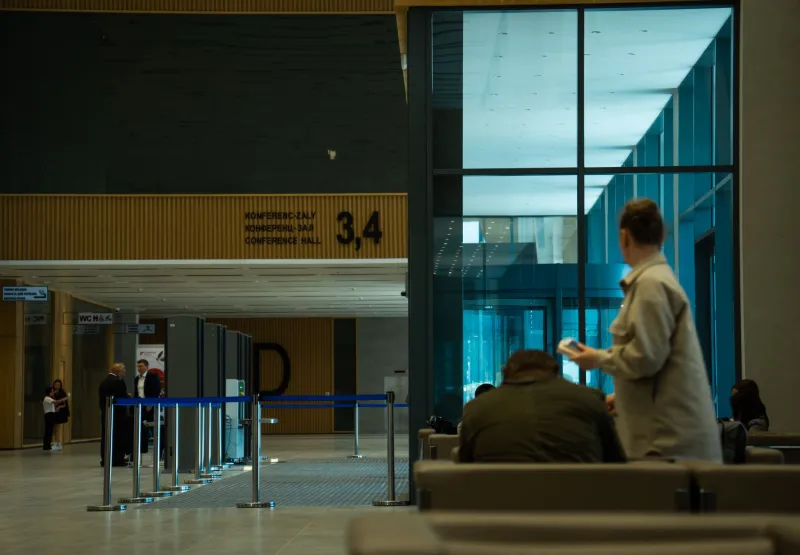
 Photo: Clinton administration, via mouni.de
You make your choice. You commit. You roll confidently into Lane 12.
This is where the universe begins laughing at you.
The Immediate Cosmic Punishment
The moment—and we mean the exact nanosecond—your cart wheels cross into Lane 12, several things happen simultaneously:
- The person in front of you reveals they're paying for seventeen separate transactions
- Lane 3's elderly gentleman somehow teleports to the exit with his 400 cans of soup
- The coupon argument in Lane 7 resolves instantly, and that customer is now loading bags into their car
- Three new lanes open, but only for people who got in line after you
You are now trapped in what scientists call the "Grocery Store Bermuda Triangle," where time moves differently and hope goes to die.
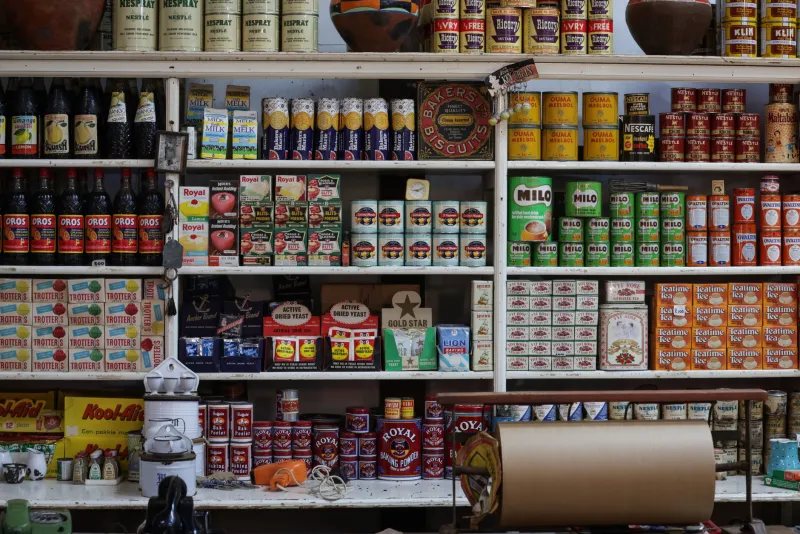
 Photo: Grocery Store Bermuda Triangle, via www.faxingzhan.com
The Price Check Phenomenon
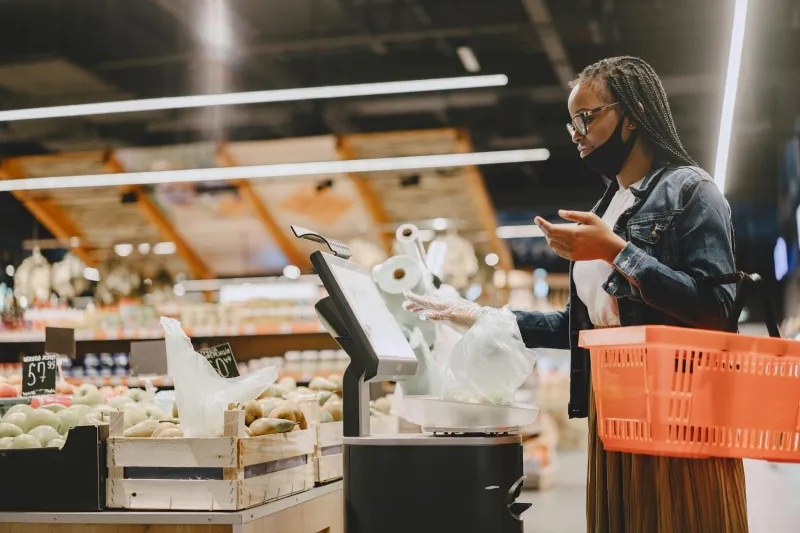
Just when you think things can't get worse, the cashier holds up an item from the person ahead of you. It's a single banana. A regular, everyday banana that has somehow become the most mysterious object in retail history.
"Price check on Lane 12," echoes through the store like a funeral bell.
The price check request travels through several dimensions before reaching someone in the produce department, who is apparently busy discovering the secrets of the universe instead of checking the price of a banana that costs 68 cents.
Meanwhile, you watch in horror as:
- Lane 3 processes an entire church potluck worth of groceries
- Lane 7 handles a family reunion shopping trip
- Lane 15 (which wasn't even open when you chose your lane) has somehow served forty-seven customers
The banana remains a mystery.
The Forbidden Lane Switch Consideration
You begin to calculate. If you abandon your position now, you could theoretically make it to Lane 9, which looks promising. But this requires acknowledging defeat, and more importantly, it means the person behind you gets to advance.
This is the sunk cost fallacy in its purest form. You've invested fourteen minutes in this lane. You're committed now. This is your lane. You will go down with this ship.
Besides, the moment you switch lanes, your original choice will suddenly start moving at NASCAR speeds, and your new lane will discover it needs a manager override for every single item.
You stay. You've become institutionalized.
The Eye Contact Embargo
Around minute eighteen, you notice other lane-switchers in nearby lines. You make brief eye contact with a fellow sufferer in Lane 8, whose cashier appears to be hand-carving the receipt from wood.
There's a moment of mutual recognition—you're both casualties of the same war. But you can't acknowledge this. To make eye contact is to admit you chose poorly. To nod is to accept defeat.
Instead, you both look away and pretend to be fascinated by the magazine rack, as if you've suddenly developed a burning interest in whether celebrities really are "just like us."
The Manager Override Symphony
Finally, FINALLY, it's your turn. Your items begin their journey across the scanner. Everything is going smoothly until—
BEEP BEEP BEEP
"I need a manager override."
Of course you do. Of course the one item that requires manager approval is your organic milk, which costs exactly the same as regular milk but apparently needs presidential authorization to purchase.
The manager, naturally, is currently resolving a complex international incident involving a returned watermelon in Customer Service. The manager will arrive sometime between now and the heat death of the universe.
Meanwhile, Lane 3 has been converted into a drive-through and is now serving cars directly in the parking lot.
The Psychological Breakdown
By minute thirty-two, you've entered the final stage: acceptance mixed with mild psychosis. You begin to wonder if this is your life now. Maybe you live at the grocery store. Maybe your family will visit you here on holidays.
You start to identify with your fellow line-prisoners. The person behind you has become your closest friend, bonded by shared trauma. You've both witnessed things that can't be explained by conventional retail science.
Together, you've watched seventeen express lanes serve customers with full carts while your regular lane struggles to process a pack of gum.
The Hollow Victory
Finally, mercifully, your transaction completes. You gather your bags with the shell-shocked expression of a war survivor. You've done it. You've conquered the checkout lane.
As you walk toward the exit, you glance back at the checkout area. Your former lane is now moving at light speed, processing customers like a well-oiled machine. The new person in your old spot will probably be done in thirty seconds.
Because that's how grocery store physics works: the lane is only cursed while you're in it.
The Universal Truth
Every grocery store operates on the same principle: your chosen lane exists in a parallel dimension where time moves backward and simple transactions become complex mathematical theorems. It's not personal—it's just the universe maintaining balance.
Somewhere, in a quantum physics lab, scientists are studying grocery store checkout lanes to understand the fundamental nature of reality. They've discovered that the speed of your lane is inversely proportional to how badly you need to be somewhere else.
It's not a bug in the system—it's a feature. The grocery store checkout lane is actually a meditation exercise in disguise, teaching you patience, acceptance, and the futility of trying to control the universe.
Or maybe the banana scanner is just really, really slow.