2,400 Words About a Nonna in Tuscany Stand Between You and the Oven Temperature
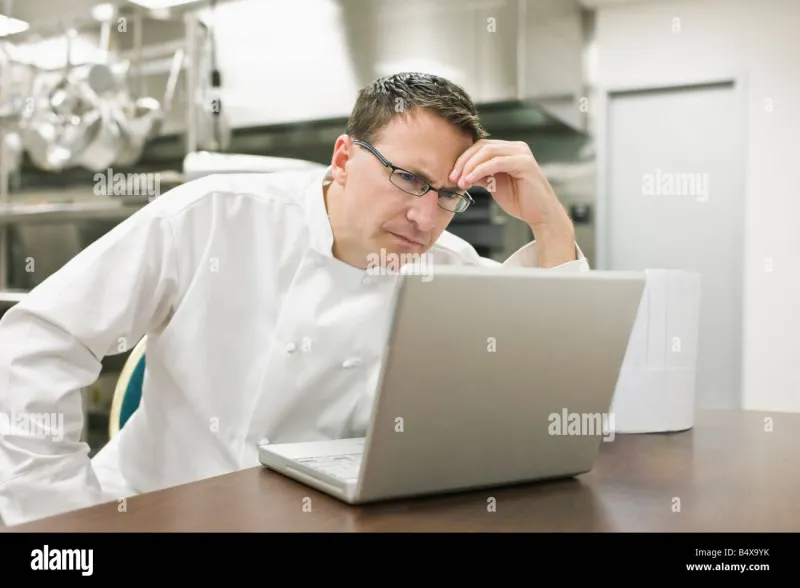
Photo: person frustrated scrolling recipe on laptop kitchen, via c8.alamy.com
You wanted one thing: the oven temperature. Maybe a cook time. Instead, the internet has decided that before you are permitted to know how long to bake chicken, you must first understand the emotional landscape of a hillside in Tuscany in 1987.
Let's walk through the modern recipe experience together, step by step, like the recipe itself refuses to do.
The Search Results Lie
It starts with a promising headline: "Easy Weeknight Chicken Thighs (Ready in 30 Minutes!)." You click. And immediately, the page betrays you. The first thing you see is a photo of the chicken — fine, acceptable — followed by a paragraph beginning, and we quote, "It was the summer my grandmother first taught me the meaning of patience."
Your grandmother taught you patience, Deb. Mine taught me to hit Ctrl+F and type "bake."
The Scroll of Sorrows
You begin scrolling. Past the grandmother. Past the second grandmother, apparently there's a whole lineage. Past a paragraph about the quality of Tuscan olive oil that contains the phrase "and honestly, isn't that what cooking is all about?"
You do not know what cooking is all about. You know what the oven temperature is not, because you still don't have it.
Somewhere around paragraph nine, you start scrolling faster, eyes darting like a person scanning a crowd for a lost child. Is that a list? No — it's a list of the author's favorite kitchen gadgets, each with an affiliate link. Paragraph twelve mentions the chicken for the first time, in passing, like an old friend they don't want to talk to at the grocery store.
The Pop-Up Gauntlet
Just as hope flickers, a full-screen overlay appears: "WAIT! Subscribe to get more recipes!" You look for the X. It is a light gray, six pixels wide, and technically exists. You miss it twice and accidentally subscribe to a newsletter you will never open, from a person whose grandmother's name you now know better than your own landlord's.
A chat bubble pops up in the corner: "Hi there! Any questions?" Yes. The temperature. But the chat is a bot, and the bot does not know the temperature. The bot has never known anything.
The Autoplay Sabotage
You find it. There it is — an actual ingredient list, rendered in a font size suitable for reading across a canyon. You lean in. And at that exact moment, a video of the recipe begins autoplaying at full volume, positioned directly over the instructions, narrating steps the text below already explains, while the text below slowly slides down the page as the video pushes it.
You are now reading the cook time through the reflection on a paused video of hands you do not trust.
The Screenshot Economy
And so we arrive at the final stage, the move every one of us has made: you screenshot the recipe card. Just the card. Clean, quiet, no memoir, no pop-ups, no bot. You now have a photo of a recipe living in your camera roll between a screenshot of a parking spot and a blurry picture of your dog.
You will never find it again. But you have it, and that's what matters.
We See You, Recipe Bloggers
Look — we get it. The stories exist for Google, the ads exist because groceries cost money, and the grandmothers are presumably lovely. This is not hate mail. This is a peace treaty.
We'll read one paragraph about Tuscany. One. A single evocative sentence about cypress trees, and then the jump link, the card, and our dignity intact.
Until then, we'll be in the comments section of the recipe, where 847 people have helpfully reported that they "made this with salmon and it was great," and one heroic stranger named Karen has posted, in full, the recipe text itself. God bless Karen. Karen has never met her grandmother, and she doesn't need to.