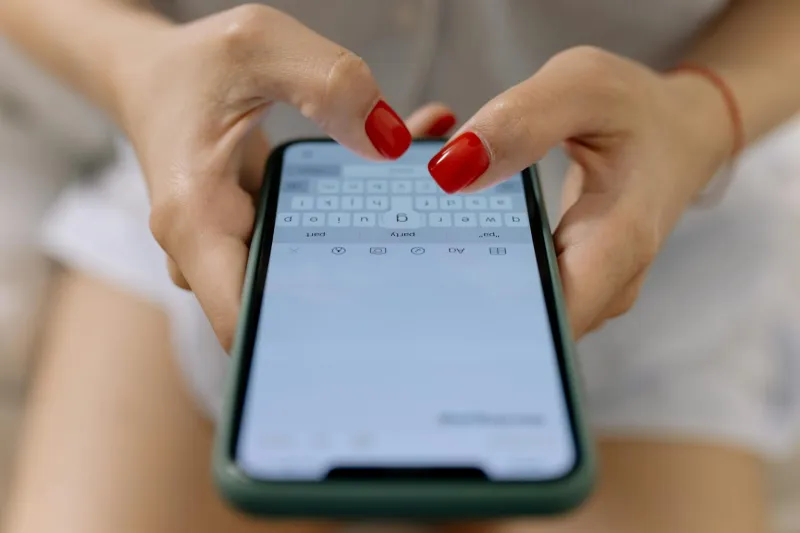
The Academic Journey Begins
Congratulations, you've just completed the most unnecessarily complex doctoral program in human history: Advanced Studies in Casual Text Message Composition, with a specialization in Overthinking Basic Human Communication.
Your journey began innocently enough. At 2:47 PM, you received a text that should have taken approximately 0.3 seconds to respond to: "Want to grab dinner Saturday?" A simple question requiring a simple answer from a simple human being. But you, my friend, are no simple human being. You are a scholar of subtext, a philosopher of punctuation, a master's degree holder in the ancient art of Reading Way Too Much Into Everything.
Chapter 1: The Great Punctuation Debate
Your first draft was ambitious: "Yes! That sounds great! I'm excited!"
But wait. Three exclamation points? That's not enthusiasm, that's hysteria. You're not a golden retriever who just heard the word "walk." You're a sophisticated adult human with complex emotions and a carefully curated public image.
Draft two: "Yes, that sounds great."
Now you sound like a customer service representative. Too formal. Too distant. This person will think you're responding to their dinner invitation with the same energy you reserve for confirming dentist appointments.
Draft three: "Yes that sounds great"
No punctuation at all? What are you, a teenager? Are you too cool for proper grammar? This isn't 2009. You have a credit score and strong opinions about thread count. Act like it.
Chapter 2: The Emoji Consultation Phase
Maybe an emoji would help convey the appropriate level of enthusiasm without seeming unhinged. You opened your emoji keyboard like a scholar approaching ancient texts, ready to decode the hieroglyphics of modern communication.
The smiley face seemed too basic. The heart eyes were definitely too much — this isn't a marriage proposal, it's a dinner invitation. The thumbs up felt passive-aggressive, like you were dismissing their suggestion rather than embracing it.
You briefly considered the fork and knife emoji, but that felt too literal. Too obvious. You're not a caveman pointing at pictures to communicate basic concepts.
After seven minutes of emoji analysis that would make anthropologists weep, you decided to go emoji-free. Sometimes the most sophisticated choice is restraint.
Chapter 3: The Tone Calibration Crisis
By minute twelve, you'd entered the advanced phase of your research: analyzing how your response would sound in their head when they read it. Would they read "sounds good" in a flat, disinterested tone? Should you add "to me" at the end to make it sound more personal?
"Sounds good to me" — but now you sound like you're reluctantly agreeing to a business proposition. Like they've presented you with a quarterly budget proposal and you've decided it meets your minimum requirements for acceptability.
Maybe "that sounds good" would be better? More specific. More engaged. But also longer, which might seem like you're trying too hard to seem engaged, which would circle back to the original problem of overthinking everything.
Chapter 4: The Comparative Literature Review
You found yourself scrolling through your previous text conversations, conducting a thorough analysis of your historical response patterns. How did you respond to similar invitations in the past? What was your typical enthusiasm baseline? Were you being consistent with your established textual persona?
You discovered that three months ago, you responded to a similar invitation with "absolutely!" But that was a different context, a different person, a different phase of your life. You can't just copy and paste responses like some kind of conversational plagiarist.
Two weeks ago, you went with "I'm in!" for a group chat invitation, but that was group dynamics. Completely different social mathematics. Individual text messages require individual text message strategies.
Chapter 5: The Existential Crisis Interlude
Somewhere around minute fifteen, you experienced a brief existential breakdown about the state of human communication in the digital age. Here you were, a functioning adult with bills and responsibilities, spending more time crafting a two-word response than you spent choosing your morning outfit.
Your ancestors communicated through smoke signals and cave paintings, and somehow they managed to build civilizations without agonizing over whether their response seemed too eager or not eager enough.
But then again, your ancestors never had to worry about whether their cave painting would be screenshot and analyzed by future anthropologists, so maybe they had the easier job.
Chapter 6: The Final Defense
After seventeen minutes of intensive research, multiple drafts, and enough mental energy to solve climate change, you arrived at your thesis statement: "Sounds good"
No exclamation point (too much). No period (too formal). No emoji (too risky). Just two perfectly calibrated words that conveyed exactly the right amount of enthusiasm for a casual dinner invitation between two adults who have successfully navigated the complex social ecosystem of modern friendship.
You hit send with the satisfaction of someone who had just completed their doctoral dissertation, defended it before a panel of experts, and emerged victorious.
The Peer Review Process
Three seconds later, they responded with "cool 👍" and you realized you'd just spent more time crafting your response than they spent reading it, processing it, and responding to it combined.
But that's okay. You didn't overthink that text message for them. You overthought it for you. You overthought it for the preservation of social harmony, for the advancement of human communication, and for the sacred art of not seeming weird in digital spaces.
And honestly? "Sounds good" was pretty much perfect. Your seventeen minutes of research had paid off. You'd achieved the holy grail of text message responses: completely unremarkable in the best possible way.
Congratulations, Doctor. Your expertise in Unnecessary Textual Complexity has been officially recognized by the University of Your Own Anxiety.