The Scene of the Crime
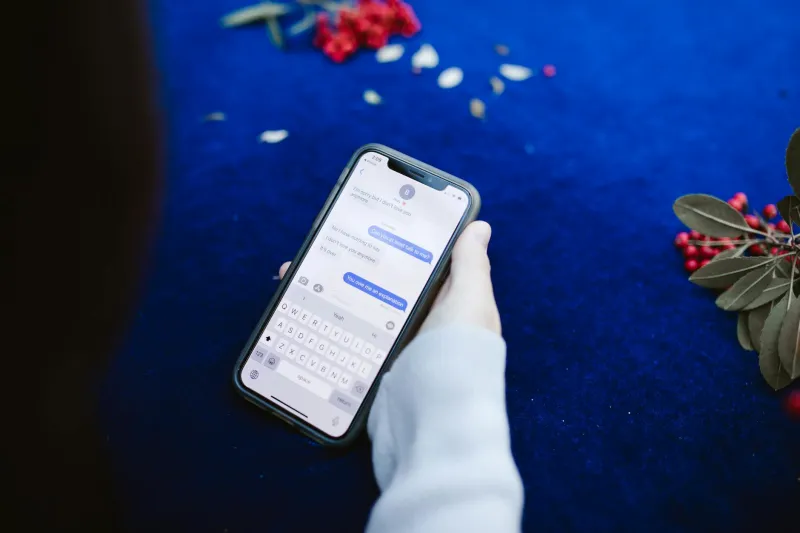
It happened so fast. Your friend sent what they clearly thought was a hilarious observation about how their cat judges their life choices, and in a moment of casual thumbing, you responded with two letters: "Ha."
Now you're staring at your phone like it just confessed to a murder, because in the complex ecosystem of digital communication, you may have just committed a war crime.
The Immediate Panic Response
The moment you hit send, your brain transforms into a supercomputer dedicated exclusively to analyzing the catastrophic implications of your response. "Ha" without additional letters? "Ha" with a period? What have you done?
You immediately start composing follow-up messages:
"Haha that's actually really funny"
Delete.
"😂😂😂"
Delete.
"Sorry, my phone is being weird, I meant to send more ha's"
Delete.
Each potential follow-up somehow makes it worse. You're now trapped in a prison of your own making, where the only escape is to pretend that "Ha" was exactly the response you intended to send.
The Hierarchy of Digital Laughter
In the unwritten constitution of text messaging, there exists a complex ranking system for expressions of amusement, and you've just deployed the nuclear option of indifference:
"Lol" = I acknowledge this was intended to be funny
"Haha" = This genuinely amused me
"Hahaha" = I'm actually laughing
"😂" = Peak hilarity achieved
"Ha" = I hate you and everything you stand for
You've essentially sent the digital equivalent of a polite golf clap at a comedy show.
The Overthinking Olympics
What follows is a masterclass in psychological torture, self-administered. You begin analyzing your response with the intensity of a forensic investigator:
Did the period make it seem sarcastic? Should you have gone with "Ha!" for enthusiasm? Is "Ha" what your grandmother would text if she understood technology and disappointment?
You start scrolling through your previous conversations, looking for evidence of your texting patterns. Have you used "Ha" before? In what context? Are you a "Ha" person? The investigation reveals that you are, in fact, not a "Ha" person. You're a "hahaha" person who occasionally deploys "lol" for variety.
This "Ha" is an anomaly. An accident. A glitch in the matrix of your personality.
The Response Time Analysis
Twenty-three minutes have passed since your friend's joke, and they haven't responded to your "Ha." This is either because:
A) They're busy living their life like a normal person
B) They're also spiraling about your response and wondering what they did wrong
C) They've screenshot your "Ha" and sent it to seventeen people with the caption "I think Sarah hates me now"
You refresh the conversation every thirty-seven seconds, hoping for some sign of digital forgiveness.
The Emoji Deliberation
You consider adding a laughing emoji to your "Ha," but now too much time has passed. Adding an emoji forty-five minutes later would be like showing up to a party with flowers after you've already insulted the host's cooking.
Plus, which emoji? The crying-laughing face feels too desperate. The simple smile seems condescending. The winking face suggests you're flirting, which would be weird because they were talking about their cat's judgmental stare.
You're now trapped in emoji purgatory, where every option feels wrong and doing nothing feels worse.
The Group Chat Consultation
In desperation, you screenshot the conversation and send it to your most trusted friend with the message: "On a scale of 1-10, how badly did I just ruin this friendship?"
Your friend responds immediately: "Lol you're overthinking it."
"LOL?" you text back. "Not 'haha'? Not even 'hahaha'? Are YOU mad at me too?"
You've now successfully spread your text anxiety like a digital virus.
The Linguistic Archaeology
You begin researching the etymology of "Ha" as an expression of amusement. When did it become acceptable? Who decided that two letters could carry so much emotional weight? You're pretty sure Shakespeare never had to worry about whether "Hark!" came across as passive-aggressive.
You discover that "Ha" can mean everything from genuine amusement to bitter sarcasm, depending on context, relationship dynamics, previous conversations, current mood, planetary alignment, and whether Mercury is in retrograde.
Basically, you've sent the Switzerland of text responses—technically neutral but somehow implying everything.
The Waiting Game
Hours pass. Your friend still hasn't responded. You've now convinced yourself that your "Ha" has ended a friendship that survived middle school, three different colleges, two career changes, and that time you accidentally liked their ex's Instagram post from 2019.
You consider sending a casual follow-up text about something completely unrelated, just to gauge the relationship status. But what if they respond with their own "Ha"? What if they've weaponized your own response against you?
You're now living in a world where "Ha" has become a loaded weapon in the arsenal of passive-aggressive communication.
The Resolution (Maybe)
Finally, your phone buzzes. Your friend has sent a new message: "Anyway, want to grab lunch tomorrow?"
They've moved on. The "Ha" has been forgotten, filed away in the vast cemetery of overthought digital communications. You respond with enthusiasm: "Yes! Hahaha I'm so hungry."
Wait. Was that too many "ha's"? Are you overcompensating now?
And so the cycle begins again.
The Lesson We Never Learn
The truth is, we've all committed the "Ha" crime and survived. We've all sent responses that felt wrong the moment they left our thumbs. We've all stared at our phones, wondering if we've accidentally communicated something we never intended.
But somehow, friendships endure. Love persists. The world keeps spinning, despite our collective inability to master the art of digital tone.
Because at the end of the day, "Ha" might just mean "Ha."
Or does it?