The Great Grocery Store Confidence Scam: Why You're Absolutely Certain Milk Costs Either $3 or $47
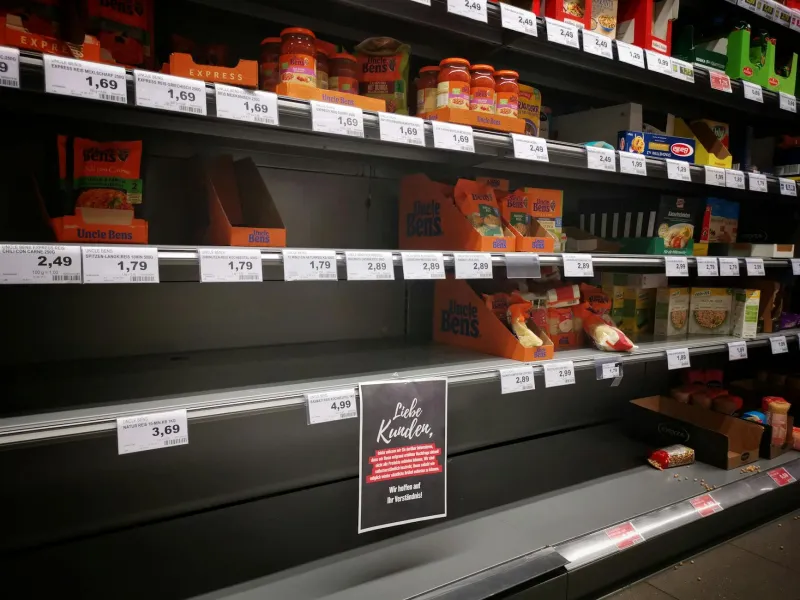
The Phantom Price Memory
Somewhere in your brain lives a grocery price list that was last updated during the Obama administration. Yet here you are, boldly declaring to anyone within earshot that "milk shouldn't cost more than four dollars" with the conviction of someone who definitely shops for groceries regularly and isn't just repeating something they overheard at Target three years ago.
The confidence is truly breathtaking. You'll stand in your kitchen, meal planning like a seasoned domestic goddess, casually estimating that a week's worth of groceries should run "maybe sixty bucks?" This calculation is based on absolutely nothing except the faint memory of your college roommate once mentioning that Ramen was cheap.
The Dairy Aisle Reality Check
Then comes the moment of truth. You're standing there, hand hovering over the milk jug, staring at a price tag that might as well be written in hieroglyphics. $4.89? Is that... good? Bad? Are you being robbed by Big Dairy, or is this actually a steal?
Your internal monologue becomes a frantic negotiation with reality: "Okay, but this is the organic stuff, so obviously it's more expensive. Regular milk is probably like... three-fifty? Wait, no, that seems low. But also high? What did milk cost in 2020? Did milk even exist in 2020?"
Meanwhile, the person behind you is also staring at milk prices with the same bewildered expression, creating a beautiful tableau of collective grocery store confusion.
The Inflation Guessing Game
The real comedy gold happens when you try to factor in inflation. You've heard it's "really bad right now," but your mathematical understanding of how it affects individual grocery items is roughly equivalent to your grasp of quantum physics.
"Well, if everything's gone up twenty percent..." you think, despite having no baseline number to calculate twenty percent of. You're essentially trying to do percentage math on a foundation of pure speculation.
So you default to the universal grocery store strategy: comparing prices to other items you also don't know the cost of. "This milk costs more than that cheese, but less than that fancy yogurt, so... it's probably fine?"
The Checkout Confidence Crisis
The real test comes at checkout, where the running total becomes a live-action psychological thriller. You're watching those numbers climb, mentally calculating whether $127.43 for what you swear was "just a few things" represents a normal grocery trip or a complete breakdown of the economic system.
Your face maintains perfect composure while your brain screams: "WHEN DID CEREAL BECOME A LUXURY ITEM?"
But here's the kicker – you'll walk out of that store and immediately forget every single price you just paid. Next week, you'll be back to confidently declaring that "groceries shouldn't cost more than eighty bucks" to whoever will listen.
The Social Media Price Prophet
The confidence really shines when you take your grocery store expertise online. You'll see a Twitter thread about food prices and immediately become an economic analyst: "I mean, I paid $6 for milk yesterday and that seems reasonable for organic."
Was it organic? Who knows. Was it $6? Probably not. Are you now an authority on dairy economics? Absolutely.
The beautiful irony is that everyone reading your confident price assessment is nodding along while having equally no idea what anything costs. It's a collective delusion that somehow keeps society functioning.
The Great Grocery Store Amnesia
Perhaps the most impressive part of this whole charade is how quickly we forget. You could spend twenty minutes researching the best price for chicken breast, comparing three different stores, and calculating cost per pound like you're preparing for a doctoral defense in poultry economics.
Two weeks later, you're standing in a different store, staring at chicken with the same blank expression, as if you've never encountered this particular protein before in your life.
Embracing the Beautiful Uncertainty
The truth is, we're all just winging it in the grocery store, operating on a combination of hope, expired coupons, and the vague sense that "this seems like too much but also I need food to live."
And honestly? That's perfectly fine. The grocery store is the great equalizer – we're all equally confused about whether $8.99 for fancy crackers represents a reasonable splurge or a complete moral failing.
So the next time you find yourself confidently declaring that "bread shouldn't cost more than three dollars" while having no earthly idea what bread actually costs, just remember: you're participating in a beautiful, universal human tradition of grocery store confidence that's been bringing people together since the dawn of shopping carts.
Yep, that's definitely a thing.