Gone to 'Grab Some Water': A Field Guide to the Modern Office Bathroom Disappearance
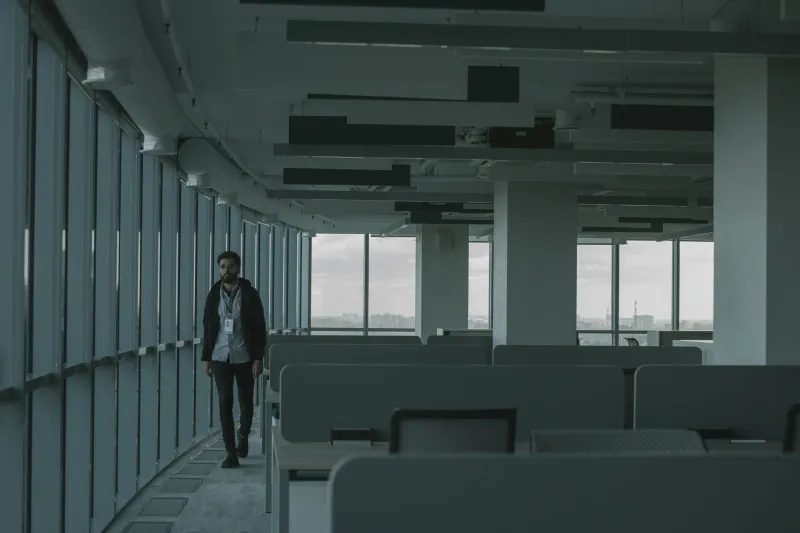
At some point in your professional career, the simple act of going to the bathroom became a logistical operation requiring timing, cover stories, and an awareness of office foot traffic that borders on tactical. You are not going to the bathroom. You are executing a mission. The bathroom is just the venue.
Nobody told you this was part of the job. It wasn't in the offer letter. And yet here you are, standing at your desk doing a casual visual sweep of who's looking before you make your move, like you're about to pull off something that requires a getaway vehicle.
The Pre-Mission Assessment
Before you can go anywhere, there is reconnaissance to conduct.
Is your manager currently walking the floor? Has the person who always wants to "just quickly grab you" been spotted in the vicinity of the kitchen? Is there any meeting that could theoretically start in the next six minutes that you'd be expected to attend? These are not paranoid questions. These are professional due diligence.
You glance at your calendar. Clear. You glance at Slack. Three green dots, no active conversations. You push your chair back at a pace designed to read as casual — not urgent, not leisurely, just a person with somewhere reasonable to be. You grab your phone with the practiced nonchalance of someone who definitely isn't about to spend eleven minutes reading about a celebrity they don't even follow.
You have been planning this exit for twenty minutes.
The Cover Story Ecosystem
The unwritten rule of the office bathroom break is that you cannot simply go to the bathroom. You must be going somewhere else that happens to involve passing the bathroom. The bathroom is a waypoint, not a destination. Destinations are suspicious. Waypoints are professional.
The classics:
"Grabbing some water" — Evergreen. Universally accepted. Requires a water bottle as a prop upon return, which you will forget approximately 40% of the time, forcing you to either go back for it or spend the afternoon quietly thirsty.
"Stepping away from my screen for a sec" — More of a remote work move, but has crossover appeal in open-plan offices where wellness culture provides cover. Implies you are managing your eye strain responsibly. Nobody questions eye strain.
The silent departure — Advanced technique. No explanation, no eye contact, just a purposeful walk in a direction that suggests you have been summoned by something important. Requires confidence. Cannot be attempted until at least eighteen months into a role.
The Hallway Encounter: A Tragedy in One Act
You have timed everything perfectly. The path is clear. You are thirty feet from the door when you hear it: your name, followed by "Hey, do you have two seconds?"
You do not have two seconds. You have approximately zero seconds, biologically speaking. But you stop. You turn. You arrange your face into an expression of open, unhurried availability, because that is what professionals do.
The two seconds become four minutes. The conversation covers a project update, a question about a file you can't remember the location of, and a brief detour into whether the office coffee machine has been fixed yet (it has not). You stand there with the calm of a hostage negotiator while your body files a formal complaint.
When you finally get to the bathroom, you sit down and stare at the wall for a moment in the manner of someone who has survived something.
The Phone: The Real Reason You Were Gone for Twelve Minutes
Let's be honest with each other.
You didn't just need the bathroom. You needed the bathroom and the complete psychological reset that comes from sitting in a locked stall with your phone, undisturbed, for a period of time that you will never accurately report if asked.
In there, you have checked Instagram, read four paragraphs of a news article you won't finish, responded to a text from your mom, watched a video that autoplayed after the video you actually meant to watch, and briefly considered whether you need a new hobby. You have also, technically, used the bathroom.
The phone is not a distraction from the bathroom break. The phone is the bathroom break. The bathroom is just the room that makes it socially permissible to disappear for a while without anyone scheduling a welfare check.
Remote Work and the Bathroom Break You Still Feel Guilty About
You would think working from home would solve this. You would be wrong.
At home, there is no audience — and yet the guilt persists, mutated into a new form. You are on a Zoom call when the need arises. Your camera is on. You cannot simply leave. You wait. The call goes long, because calls always go long. You type a message into the chat — "brb one sec" — and then immediately regret it because now everyone knows you left and they're going to wonder why and this is too much information for a professional context and why did you type that.
You return forty-five seconds later and someone has already asked a question directed at you. You say "sorry, can you repeat that?" which is the third time you've said it today. Nobody says anything. The call continues. You have survived, but at a cost.
The Return: Selling the Alibi
How you come back matters almost as much as how you left.
Too fast: suspicious. Were you even gone? Did anything happen in there? People who return too quickly are not trusted.
Too slow: also suspicious. What were you doing? How much water did you need? Is everything okay at home?
The sweet spot is somewhere between eight and fourteen minutes. Long enough to be plausible, short enough to avoid a wellness check. You sit back down, open a document that was already open, and type something. Anything. The typing signals: I am back and I am working and I was always working and I have no idea what you're referring to.
You check Slack. Nobody noticed. Nobody ever notices. You have been doing this for three years and not once has anyone said anything.
And yet tomorrow you will plan the whole thing again, because the alternative — just getting up and going, without strategy, without cover, without a prop — feels like a risk you are not yet ready to take.